
- 13 June 2026
- 11 min read
Packing properly can protect your belongings, reduce delays and make unloading at your new home much easier. These packing tips for moving house cover everything from choosing suitable materials to labelling boxes and preparing your essentials for moving day.
Before You Start Packing
Good packing begins with preparation. These packing tips for moving house start with deciding what you are taking, gathering the right materials and creating a clear plan for working through each room.
Starting early will give you time to pack carefully rather than rushing during the final few days before your move.
1. Start Earlier Than You Think
If you are learning how to pack for moving house, begin as soon as your moving date becomes reasonably clear. Start with belongings you rarely use, such as seasonal clothing, books, decorations and items stored in spare rooms, lofts or garages.
Leave everyday essentials until later and aim to complete a manageable amount each day. This prevents packing from becoming one large, stressful task immediately before moving day.
“Packing a few boxes each day is far easier than trying to pack your entire home during the final weekend.”
2. Declutter Before You Pack
There is little benefit in paying to move belongings you no longer need. Work through each room and separate items into keep, sell, donate and dispose categories before packing begins.
Decluttering reduces the number of boxes, saves vehicle space and can lower the amount of time required to load and unload your belongings.
3. Use Strong, Good-Quality Boxes
Use sturdy moving boxes that can support the weight of their contents and stack safely inside the removal vehicle. Avoid damaged, damp or weakened boxes, as they are more likely to collapse during lifting or transportation.
4. Gather Your Packing Materials
Before you begin, gather strong boxes in different sizes, packing tape, marker pens, labels, packing paper and protective wrap. You may also need mattress bags, wardrobe boxes, furniture covers and resealable bags for screws and fittings.
Keeping all your materials together prevents unnecessary delays once packing is underway.
5. Create a Room-by-Room Plan
Decide which rooms and belongings should be packed first. Begin with storage spaces, spare rooms and items that are rarely used, then gradually work towards kitchens, bedrooms and everyday essentials.
A simple plan helps you track your progress and prevents several rooms being left half-packed.
6. Pack One Room at a Time
Complete one room or clearly defined area before moving on to the next. This makes packing feel more manageable and reduces the chance of belongings from different rooms becoming mixed together.
Keeping each box assigned to one room will also make unloading and unpacking much easier.
7. Keep Boxes at a Safe Weight
Avoid filling large boxes entirely with heavy belongings. Use smaller boxes for books, tools and dense items, while reserving larger boxes for bedding, cushions and lighter belongings.
Each box should be light enough for one person to lift safely without the base collapsing.
Packing Boxes Safely and Efficiently
The following packing tips for moving house will help keep your boxes stable, manageable and easier to transport.
8. Reinforce the Bottom of Every Box
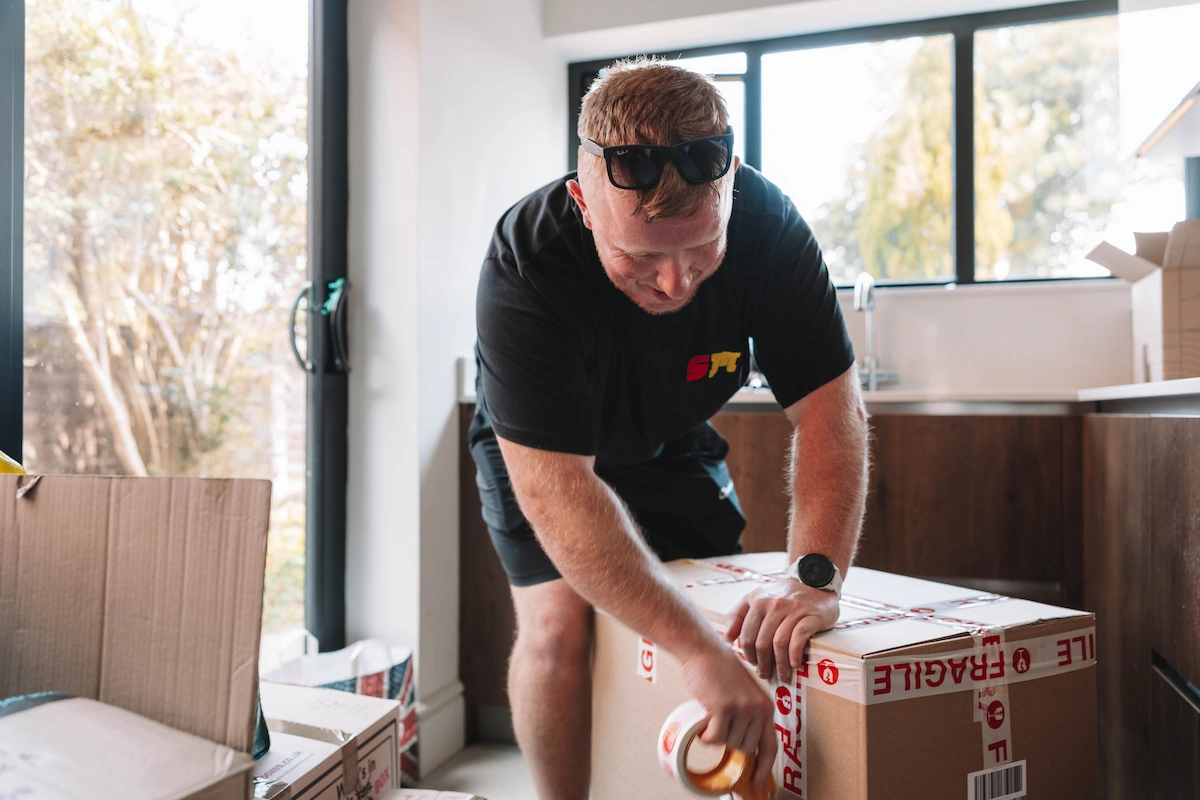
Secure the bottom of each box with strong packing tape before adding anything. Run tape along the main opening and across the seams for additional support, particularly when packing heavier belongings.
Never assume a box is secure simply because its flaps have been folded together.
9. Put Heavier Items at the Bottom
Place heavier belongings at the bottom of each box and lighter items on top. This creates a more stable base and reduces the risk of delicate belongings being crushed.
Keep the weight evenly distributed so the box does not become difficult to carry or tip to one side.
10. Fill Empty Spaces Inside Boxes
Fill gaps with packing paper, towels, clothing or other soft materials to prevent belongings moving around during transportation.
The contents should feel secure when the box is gently moved, but avoid forcing in so much material that the sides or top begin to bulge.
11. Label Every Box Clearly
Write the destination room and a brief description of the contents on the top and at least one side of every box. Add clear instructions such as “Fragile”, “This Way Up” or “Open First” where appropriate.
Labels on the sides remain visible when boxes are stacked inside the removal vehicle or your new home.
12. Create a Simple Colour-Coding System
Assign each room a different coloured label, sticker or marker. For example, blue could represent the kitchen, yellow the main bedroom and green the living room.
Place a matching colour label on each room at the new property so the removal team can identify where boxes belong quickly.
Protecting Fragile and Valuable Items
These packing tips for moving house focus on reducing movement inside boxes and preventing delicate belongings from knocking together.
13. Wrap Fragile Items Individually
Wrap glasses, ornaments, ceramics and other delicate belongings separately using packing paper, bubble wrap or another suitable protective material.
Prevent fragile pieces from touching each other directly and add extra cushioning around the sides, bottom and top of the box.
14. Avoid Using Newspaper on Delicate Items
Newspaper can transfer ink onto glassware, ceramics, clothing and other light-coloured surfaces. Use clean packing paper or acid-free tissue paper for anything that could be stained or marked.
Newspaper may still be suitable for filling empty spaces, provided it does not come into direct contact with delicate belongings.
15. Pack Plates Vertically
Wrap each plate individually and place it upright on its edge rather than stacking plates flat on top of one another. Plates packed vertically are generally better able to withstand pressure during transportation.
Add cushioning between each plate and clearly label the box as fragile.
16. Protect Glasses and Hollow Items
Fill the inside of glasses, mugs, vases and other hollow items with clean packing paper before wrapping the outside individually.
Place heavier glassware at the bottom of the box and avoid leaving empty spaces that could allow items to move or collide.
17. Keep Important Valuables With You
Keep passports, keys, jewellery, cash, medication, important documents and small valuable belongings with you rather than placing them in the removal vehicle.
Pack them in a clearly identified bag or secure container that remains under your control throughout moving day.
Preparing Your Belongings for Moving Day
These packing tips for moving house will help you prepare furniture, clothing, electronics and other belongings before moving day.
18. Photograph Electronic Connections
Before disconnecting televisions, computers, routers and entertainment systems, photograph the cables and connections. These pictures can make reconnecting everything at your new home much easier.
Label cables where necessary, keep them with the correct device and back up important files before moving any computer equipment.
19. Keep Screws and Fittings Together
Place screws, bolts, brackets and other small fittings from dismantled furniture into labelled resealable bags.
State which item each bag belongs to and, where practical, securely attach it to the relevant furniture without applying tape directly to a finished surface.
20. Protect Furniture Before It Is Moved
Empty cupboards and drawers unless your removal company has confirmed that their contents can remain inside. Remove loose shelves, glass panels and detachable parts where appropriate.
Use suitable furniture covers, padded blankets or protective wrap to reduce the risk of scratches and marks. Check whether your removal team will provide these materials before purchasing your own.
21. Pack Clothing Carefully
Wardrobe boxes allow hanging clothes to remain on their hangers and can reduce creasing. Folded clothing can be packed into suitcases or clean, clearly labelled boxes.
Make sure clothing is clean and dry before packing, and pack seasonal or rarely worn items before everyday outfits.
Final Packing Checks
Use these final packing tips for moving house to make sure your essentials are accessible and everything is ready before the removal team arrives.
22. Prepare a Moving-Day Essentials Box
Pack one clearly labelled box or bag containing everything you may need during moving day and your first night in the new property.
Include toiletries, medication, phone chargers, toilet roll, cleaning supplies, basic tools, drinks, snacks, mugs, a kettle, bedding and a change of clothes. Keep this box readily accessible rather than loading it first.
23. Check What Cannot Be Transported
Ask your removal company which belongings they cannot safely carry. Restricted items may include fuels, gas cylinders, flammable liquids, certain chemicals, paint, explosives and other hazardous materials.
Deal with restricted items safely before moving day and avoid packing leaking containers, open food or anything that could damage other belongings.
24. Finish Packing Before the Removal Team Arrives
Unless you have booked a professional packing service, aim to have all boxes packed, sealed and labelled before the removal team arrives.
Clear hallways and doorways, separate anything that is not being moved and make sure the team can access furniture and boxes safely. Being prepared helps prevent delays and additional charges.
25. Complete a Final Walk-Through of Your Home
Before leaving, check every room, cupboard, wardrobe, loft, garage, shed and outdoor storage area for anything that may have been missed.
Make sure your essentials, valuables and important documents are with you, then complete any final meter readings and key-handover arrangements.
FAQs
Common Packing Questions
Here are answers to common questions about how to pack for moving house safely and prepare your belongings for moving day.
When should I start packing for a house move?
Ideally, begin packing several weeks before moving day. Start with seasonal, decorative and rarely used belongings, then gradually work towards everyday items as your moving date approaches.
What packing materials will I need?
Most moves require strong boxes in different sizes, packing tape, marker pens, labels, packing paper and protective wrap. Mattress bags, wardrobe boxes, furniture covers and resealable bags for fittings may also be useful.
How should I pack fragile belongings?
Wrap fragile items individually and prevent them from touching inside the box. Add cushioning around the bottom, sides and top, fill empty spaces and clearly label the box as fragile.
How heavy should moving boxes be?
Each box should be light enough for one person to lift safely. Pack books, tools and other dense belongings in smaller boxes, while using larger boxes for bedding, cushions and lighter items.
What items should not be packed for removals?
Removal companies may be unable to transport fuels, gas cylinders, flammable liquids, certain chemicals, explosives and other hazardous materials. Ask your chosen company for its restricted-items policy before packing.
Can ShiftMate pack my belongings for me?
Yes. ShiftMate offers professional packing services and can supply suitable boxes and protective materials. Discuss your requirements when requesting a quote so the correct materials and packing time can be arranged.